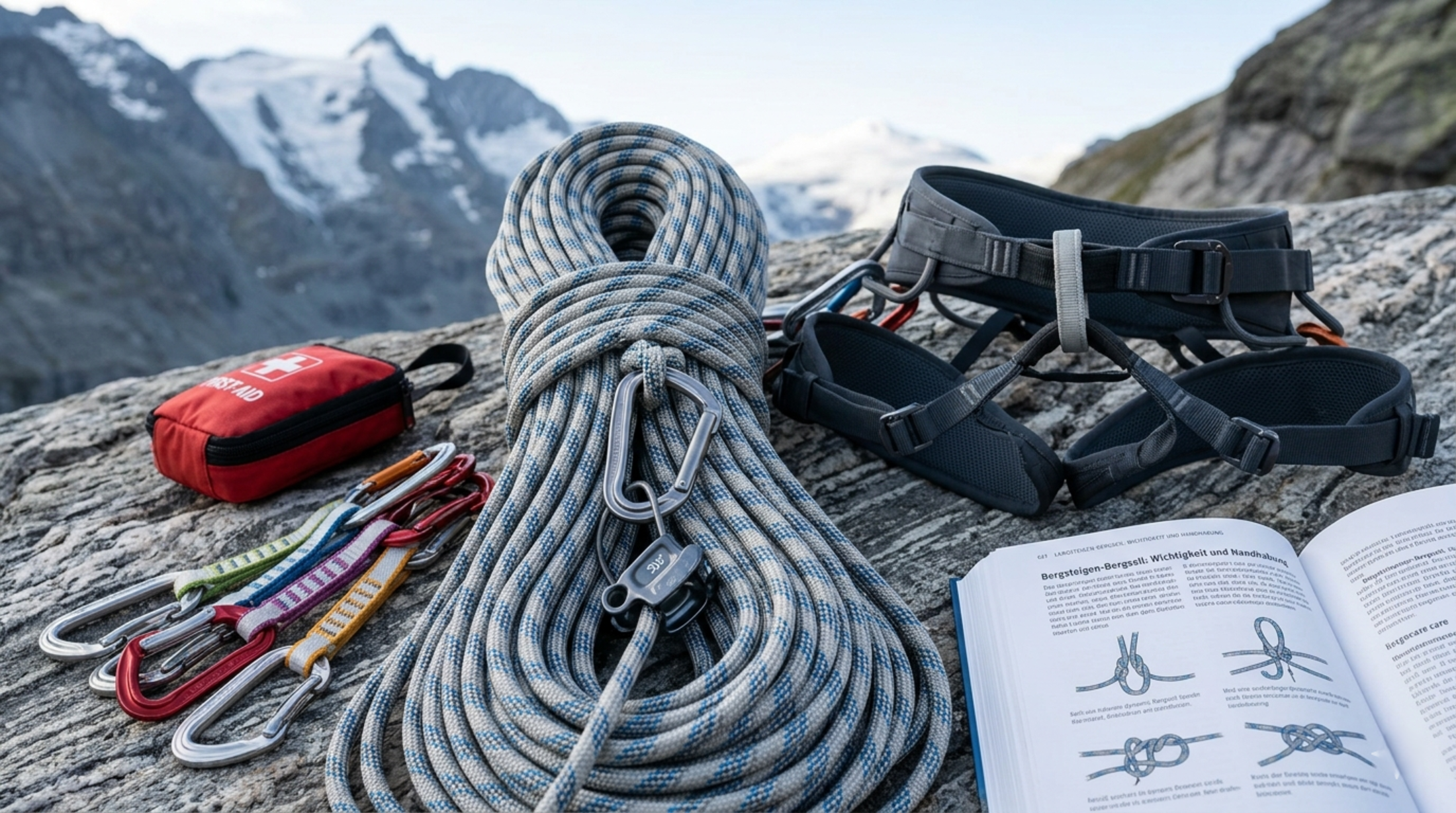
Mountaineering – the right climbing rope
The climbing rope is the most important safety element in climbing. Here you’ll learn what to look for in rope types, characteristics, and choosing the right rope for your specific use.
The climbing rope as the primary safety device
Modern ropes have a core-sheath construction: the core bears the load, while the sheath protects against abrasion. It is important that the rope complies with the UIAA standard.
Dynamic or static?
Dynamic ropes stretch to absorb the impact of a fall. Static ropes have almost no stretch and are only suitable for climbing or rappelling.
Diameter & Application
Mountaineering ropes typically have a diameter of 7 to 10 mm. It is essential that the belay device is compatible with the rope’s diameter.
The three main categories of climbing ropes
Single ropes
The standard choice for indoor climbing gyms, outdoor climbing areas, and many mountaineering routes. They are particularly easy to handle and are typically available in lengths ranging from 55 to 70 meters.
Twin ropes
Are always used as a double rope. They offer increased safety and allow rappelling over the full length of the rope.
Half ropes
Versatile for use in alpine terrain. They can be attached individually or together and should be well waterproofed.
Key Features of Mountaineering Ropes
When buying a climbing rope, it's not just the length and diameter that matter. Safety ratings and material properties also play an important role.
Standard drop number
A measure of tear resistance under controlled drop conditions.
Impact force
The maximum force acting on the body, safety chain, and equipment when absorbing a fall.
Working elongation
Describes the rope's elasticity under static load.
Mantle displacement
The core and mantle are examined for displacement and possible thickening.

Crampons for greater safety on ice and firn
Crampons are made of sturdy steel alloys and provide greater safety on snow, ice, and in alpine terrain. Different models are used depending on the type of hike and the terrain.
Grödel
Versatile crampons suitable for almost any type of shoe. Lightweight, compact, and ideal for crossing snowfields, as well as for approach routes and trekking tours.
Lightweight crampons
Eight- to ten-point models for easy glacier hikes, flatter snowfields, and straightforward ascents and descents. Not suitable for steep ice couloirs.
Crampons with a hinge
For steeper terrain and ice climbing. Models with 12 points provide better grip at the front. Strap bindings work best with sturdy soles, while rocker bindings require crampon-compatible mountaineering boots.
Anti-clog plates prevent snow from sticking. Important: Crampons should always be secured to your leg with a safety strap.
Are you looking for the right gear for your trip?
We offer personalized advice on climbing ropes, crampons, clothing, and other gear for alpine expeditions and mountain tours.