All-Mountain
For piste, occasional off-piste adventures, and first tricks. All-mountain boards offer balanced riding characteristics and are suitable for many types of riders.
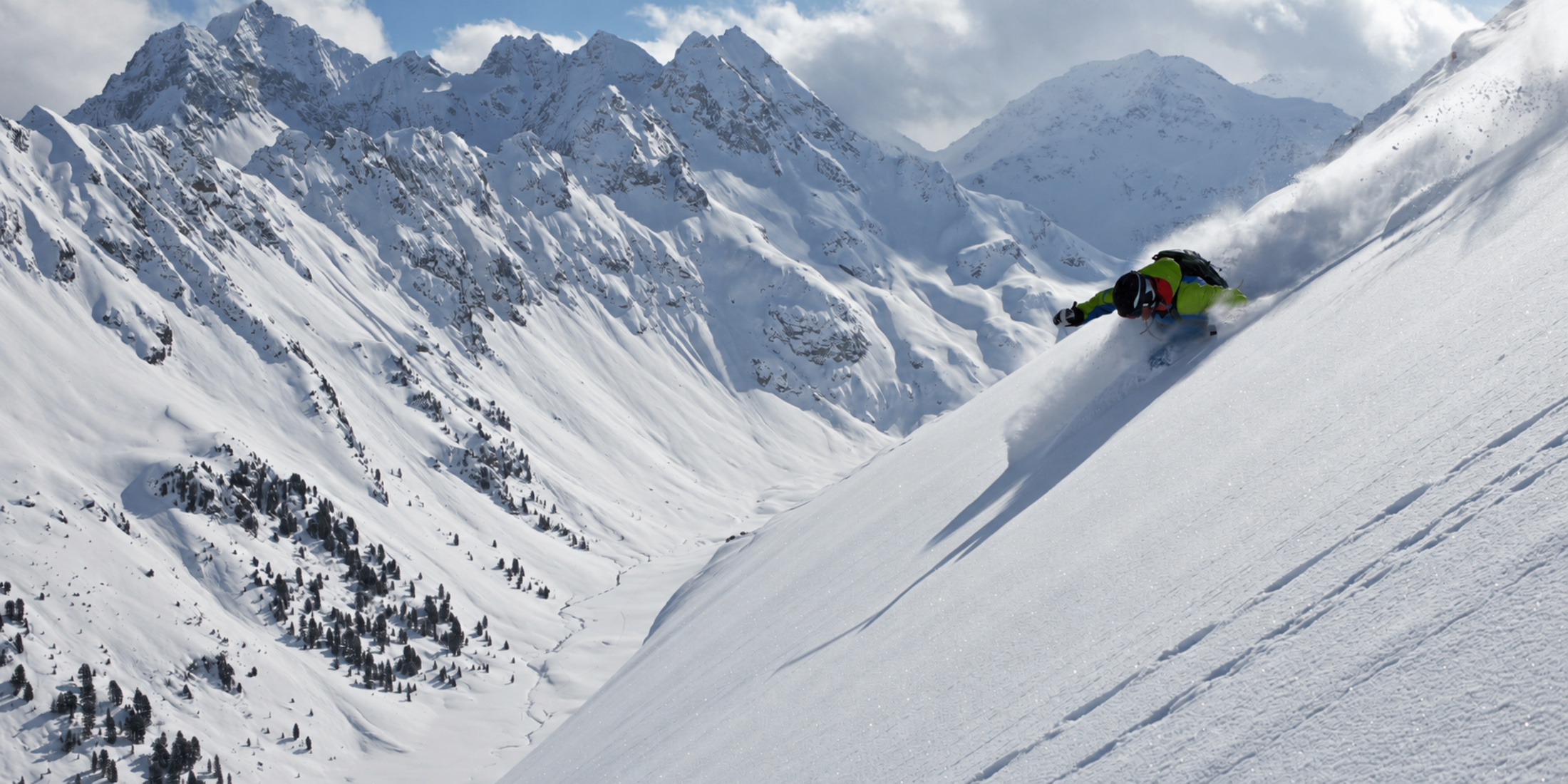
All-mountain, freestyle, freeride or race: construction, length, camber, binding and boots determine how a snowboard performs on the slopes around Sölden, in the park and in the powder.
Snowboards differ significantly depending on the area of use, riding style and construction. Whether freestyle in the snowpark, all-mountain on the best prepared slopes in Sölden or freeride in deep snow: the choice of the right board influences riding fun, control and safety.
Directional stability, smooth running, agility, edge grip and flotation are determined, among other things, by length, width, flex, shape and camber. Our experts at Sport Brugger in Sölden will help you choose the right snowboard for your riding style and skill level.
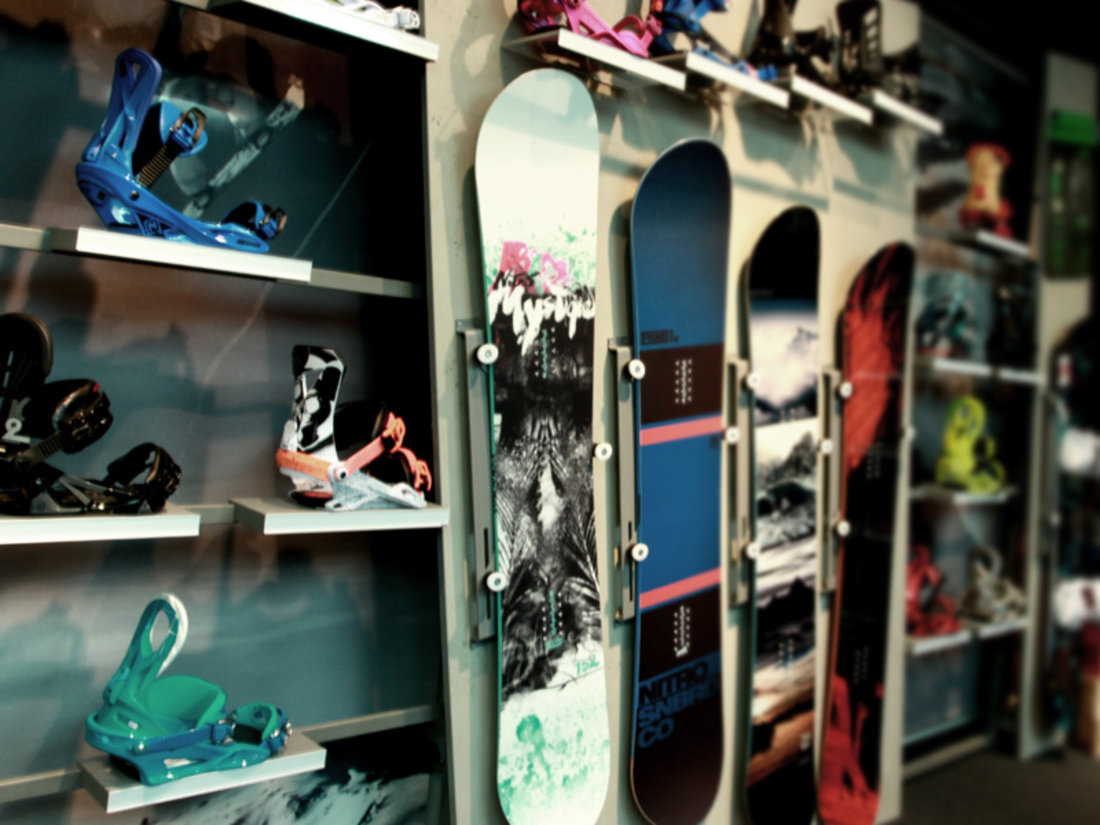
Most boards fall into one of the following categories: all-mountain, freestyle, freeride, and alpine or race.
For piste, occasional off-piste adventures, and first tricks. All-mountain boards offer balanced riding characteristics and are suitable for many types of riders.
Freestyle boards usually have a twin-tip shape. They are easy to turn, relatively soft, and suitable for tricks, jumps, halfpipe, and snowpark.
Freeride boards are designed for terrain and deep snow. A longer, wider nose and a rearward stance provide lift and stability.
Narrow and torsionally stiff boards designed for fast rides, carving, and alpine racing. They offer direct edge grip and precise power transfer.
The profile describes the shape of the snowboard from the side and affects edge grip, turning ease, floatation, and the overall riding experience.
Classic camber provides excellent edge grip, a smooth ride, and direct power transfer. It is particularly well-suited for on-piste skiing, carving, and sporty skiers.
Raised contact points make the board more agile and forgiving. Rocker makes tricks easier and improves floatation in deep snow.
Hybrid profiles combine camber and rocker zones, creating a versatile blend of edge grip, stability, agility, and floatation.
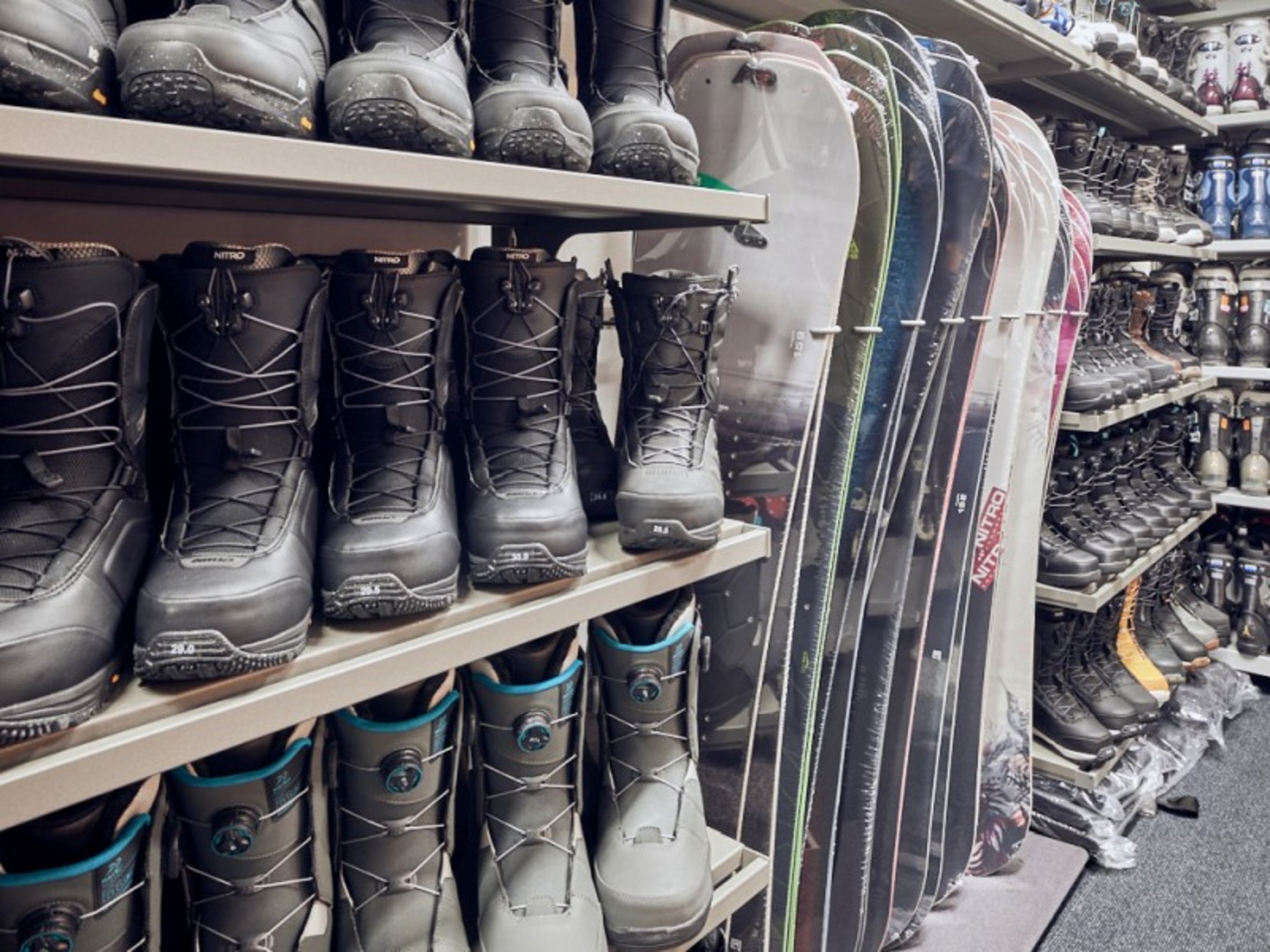
The right snowboard length
Die passende Länge hängt vor allem vom Körpergewicht, Fahrkönnen, Einsatzbereich und der Konstruktion des Boards ab. Die Orientierung zwischen Schulter und Nase ist lediglich ein grober Ausgangspunkt.
Kürzere Boards sind wendiger und leichter zu kontrollieren. Längere Boards bieten mehr Laufruhe, Stabilität und Auftrieb im Powder.
| Application area | Length tendency | Advantage | Suitable for |
|---|---|---|---|
| Freestyle | Rather shorter | Agile and easy to turn | Park, tricks and switch |
| All-Mountain | Medium length | Balanced and versatile | Piste and mixed terrain |
| Freeride | Rather longer | More stability and floatation | Powder and off-piste |
| Alpine / Race | Longer and narrower | High stability and edge grip | Fast piste runs |
| Application area | Freestyle | All-Mountain | Freeride | Alpine / Race |
|---|---|---|---|---|
| Length tendency | Rather shorter | Medium length | Rather longer | Longer and narrower |
| Advantage | Agile and easy to turn | Balanced and versatile | More stability and floatation | High stability and edge grip |
| Suitable for | Park, tricks and switch | Piste and mixed terrain | Powder and off-piste | Fast piste runs |
Bindings affect comfort, freedom of movement, and power transfer, and must be compatible with your board, boot, and riding style. At our Sport Brugger stores in Sölden, you’ll find bindings for every skill level and every type of riding.
The classic strap binding offers a high level of comfort and is used in all-mountain, freestyle, and freeride riding.
A rear-folding highback allows for quick entry. Modern systems combine comfortable handling with good support.
When used with hard boots, it offers very direct power transfer and is primarily used for carving and alpine racing.
Adjusting the Binding Correctly
Freestylers often use a duck stance, for example, +15° in the front and −5° in the back. This allows for more controlled riding and landing in both directions.
In a regular stance, the left foot is in front; in a goofy stance, the right foot is in front. The key is to choose the stance that feels natural and most comfortable to you.
Snowboard boots should fit snugly without causing pressure points. They stabilize the foot and ankle and transfer movements to the binding.
Suitable for beginners, freestyle riders, and riders who prefer plenty of freedom of movement and a smooth ride.
The all-around board for all-mountain and freeride, offering a great balance of comfort, grip, and responsive handling.
For sporty drivers, high speeds, and maximum power transfer. The stiffer construction provides more support.
Visit one of our Sport Brugger shops in Sölden and try out various snowboards, boots, and bindings. Our staff will personally advise you and help you find the right equipment together.
© 2026 – Sport - Brugger GmbH. Alle Rechte vorbehalten.