Ski Touring Buying Guide
Tour Skiing – The Right Equipment for Every Adventure
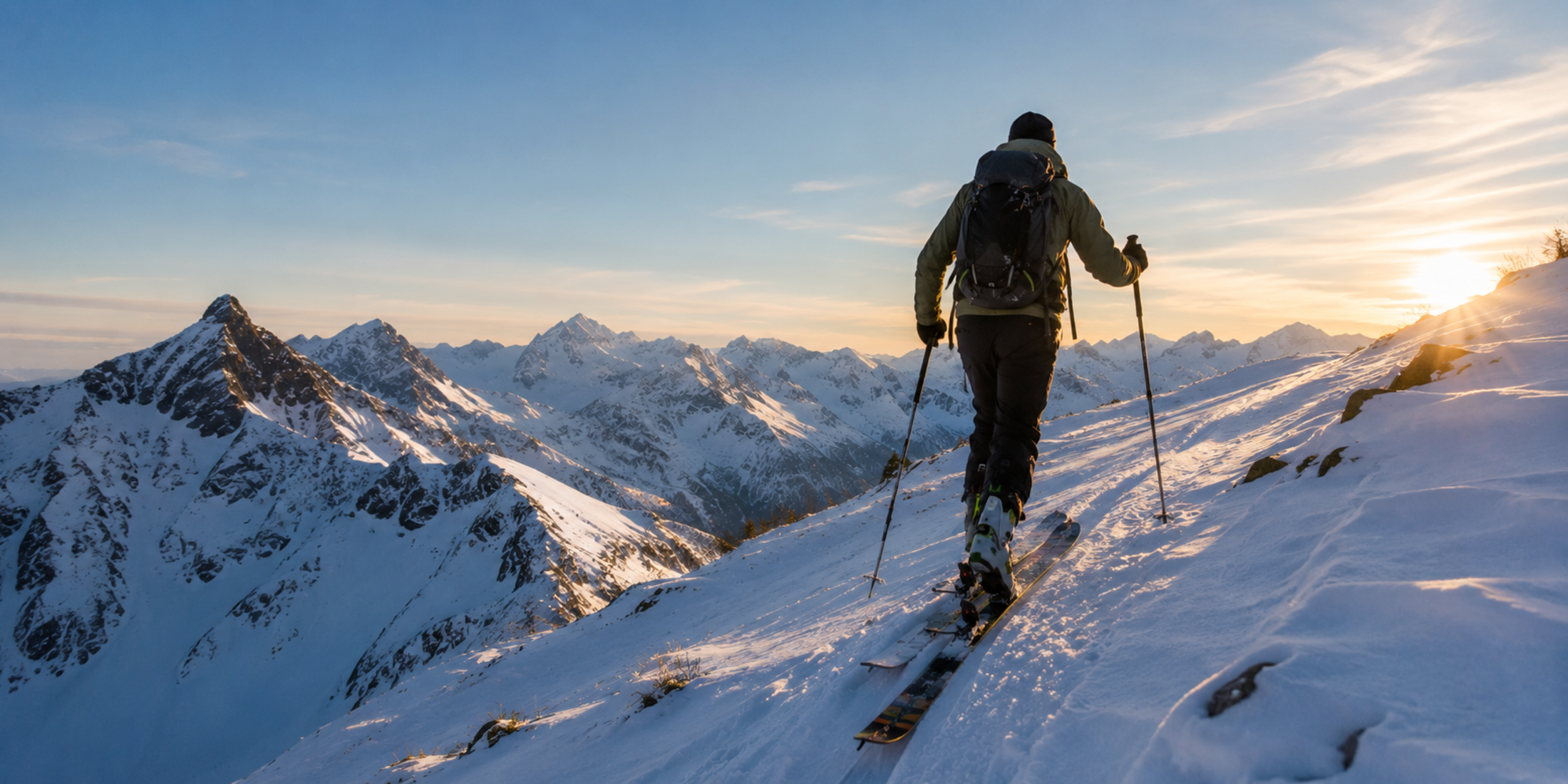
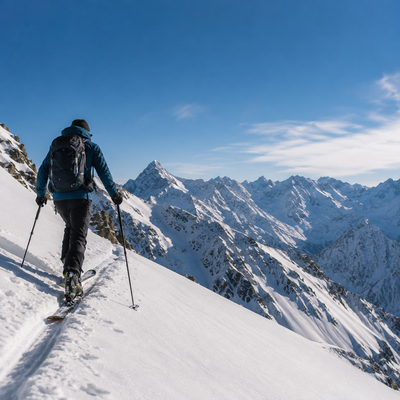
Ski tourers seek their sporting enjoyment off-piste. Equipment requirements vary depending on the intended use and terrain. Ski tourers and extreme ski mountaineers who place particular emphasis on good climbing performance need lightweight skis, lightweight bindings, and lightweight boots. Those who prioritize good downhill performance need sturdy equipment, which is consequently somewhat heavier. Modern touring carvers offer the optimal balance between climbing performance and good downhill performance.
Touring skis are essentially designed like alpine skis (but slightly wider along the entire length and at the tip—for better float in deep snow). To reduce weight, plastics and lightweight metals are used in lightweight construction (honeycomb core, hollow chambers, etc.). The standard length is 170 cm with a turning radius of Ø 18 m. Some manufacturers include a hole in the center of the ski tip and a recess at the tail for attaching ski skins.
Types of Touring Skis:
Up-and-comers
This target group likes to avoid every extra gram. Skis in this category often weigh no more than 700g per ski. The weight savings come at the expense of stability on the descent; good skiing technique is essential here. Shorter skis promise better handling on ascents and easier turning.
Downhill Skiers
For this target group, the focus is on downhill skiing; the skis are generally designed to be slightly wider, but some also feature a carving waist. The sturdier construction results in greater weight, which, however, has a positive effect on the skiing experience. Longer skis promise better tracking on the descent and less sinking during the ascent. Weight is usually >1200 g; turning radii for freeriders can reach up to 25 m.
Tour bindings
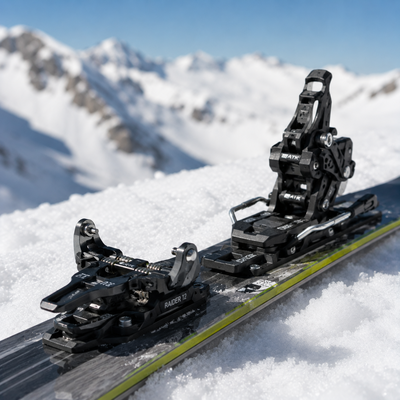
Unlike alpine bindings, tour bindings must support climbing and traversing steep slopes. They must be correspondingly lightweight, have standardized adjustment options (safety binding), and be operable with gloves. A climbing function and crampon are part of the necessary basic equipment. Adjustable climbing aids reduce the walking angle; the adjustment should be possible using the ski pole. Crampons provide additional safety on icy terrain; they can be attached and activated with the pole if needed. Switching from ascent to descent mode must be quick. Most tour bindings also feature a ski stopper, although traditional leash straps still have their justification.
Touring Ski Boots
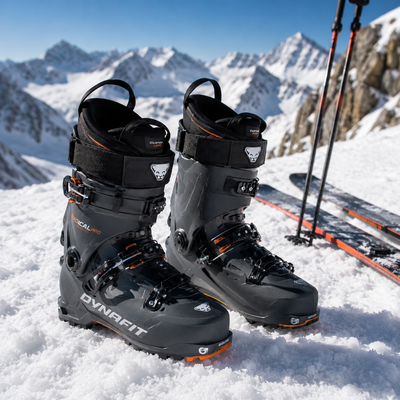
The touring ski boot must meet the requirements for both walking and skiing. For walking, it must be lightweight, prevent pressure and chafing points through a perfect fit, have a soft cuff closure, and feature a grippy tread sole. For skiing, it must provide sufficient stability, fine buckle adjustments, and enough insulation for warm feet. The materials used correspond to those of
alpine ski boots\/a>. Most touring ski boots come with three buckles, mainly designed as ratchet systems (micro-fine adjustment). For ascent and descent, the cuff can be adjusted at the back (walk\/ski). Additional features include canting adjustment, compatibility with multiple binding systems, thermoformable inner boots or insoles, etc.\/p>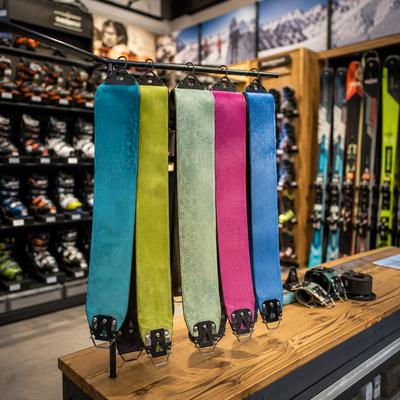
Climbing Skins
To be able to ascend on snow, you need a skin. It is glued onto the base and attached at the tip and tail. The market offers custom-fit skins that cover the base but not the edges. Special requirements are placed on the skin glue, which often has to perform perfectly several times a day (adhesive strength, no residue on the base, resistant to snow temperature). Skins are made either from natural material (mohair), synthetic fiber (nylon), or a blend that combines the good properties of both materials (pile, mix). Mohair is recommended for its excellent gliding properties, but it is less durable. Synthetic skins score points for excellent grip values and longer durability, but glide less well.<\/p>