Comfort Ski Boots:
These ski boots are characterized by ease of use and maximum comfort. Above all, they are soft and warm. However, power transfer from the skier to the ski is a secondary consideration with these ski boots.
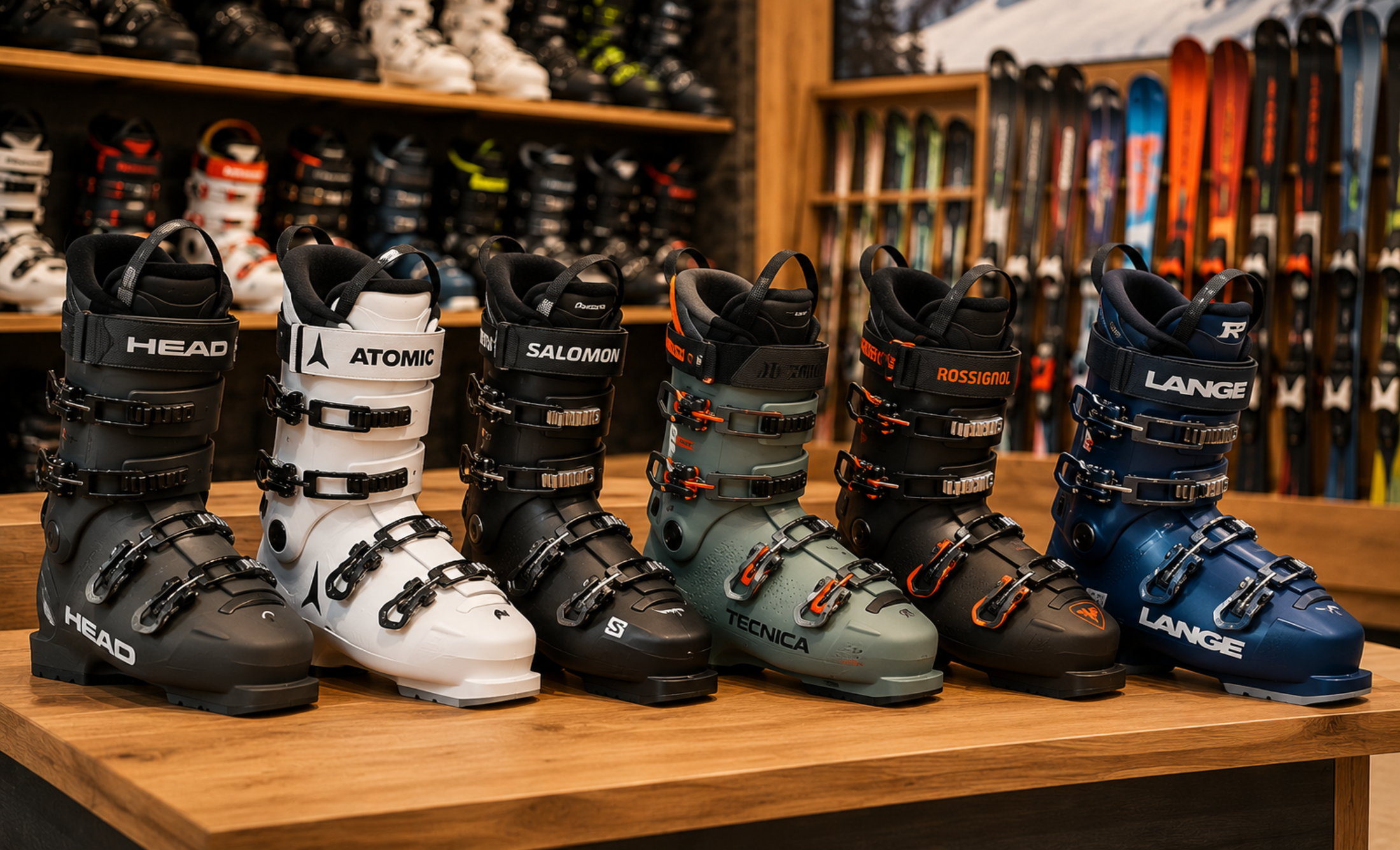
The right ski boot ensures optimal support, maximum comfort, and precise power transfer to the ski
The most important aspect of the ski boot is the perfect hold. The right boots optimally transfer power to the ski. The better the boots fit, the better the performance. If the ski boot is too wide, the stance unstable, or the boot flex too soft, the skiing characteristics deteriorate and there is a higher risk of falling or injury. Tightening the boots if they are too wide is a fatal misconception. Closing the ski boot buckles too tightly squeezes the foot. Cold and painful feet are the result. The most important thing in a ski boot is the correct fit. Therefore, it is important that the feet are measured beforehand and one of our ski boot experts selects the anatomically correct ski boot model for you.
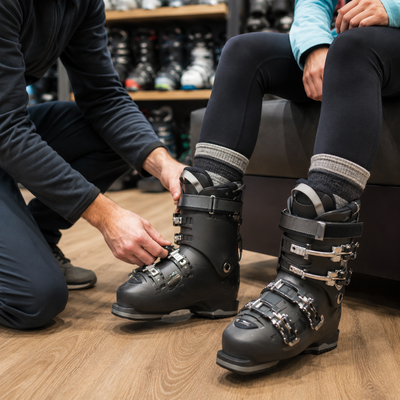
After measuring and analyzing the feet, the fitting follows. A competent specialist not only measures the length of the feet but also pays attention to the width and individual anatomy of the foot, such as hallux, high instep, or wide forefoot. Ski boots should ideally be tried on with the socks that will also be worn while skiing. Functional ski socks are highly recommended here. These are padded at critical points and optimally absorb sweat. The ski boot buckles should be closed from bottom to top. It is important that no pressure points occur, but the foot still has a firm hold. If the heel slips upwards or the hold on the sides is not firm, this clearly speaks against the shoe model. If the shoe offers too little space at the front or presses on the sides, the model simply has the wrong fit. The correct fit can best be tested by bending the knees and leaning slightly to the side.<\/p>
These ski boots are characterized by ease of use and maximum comfort. Above all, they are soft and warm. However, power transfer from the skier to the ski is a secondary consideration with these ski boots.
The hard shell transfers power optimally and immediately, without any loss. The tighter the boot fits, the more stable and thinner-walled the liner becomes. The focus is on performance and power transfer, rather than comfort. These ski boots have a very high flex.
Performance ski boots offer the perfect balance between comfort and performance. The liner is comfortable, but the shell is slightly stiffer than on comfort models. The flex tends to be a bit higher, which in turn lends itself to a sporty skiing style.
These ski boots have a relatively low flex. The focus here is on mobility and optimal cushioning. The cushioning is designed to absorb hard impacts and shocks and protect the skier as much as possible. The high mobility of the boot shaft also makes short ascents possible.
Comfort during the ascent is the key factor with these ski boots. One important factor is maximum shaft flexibility to ensure that stride length isn’t restricted, which helps conserve energy. Minimal weight and a good fit are also important factors. Nevertheless, downhill performance should not be overlooked, as it ensures optimal support and maximum safety during the descent.
These ski boots are specifically designed to meet the needs and anatomy of women. A slightly narrower last is combined with a softer flex. In addition, the cuff is significantly lower, which prevents pressure points on the calf, and the heel is slightly narrower, which improves support. These boots also offer significantly better insulation.
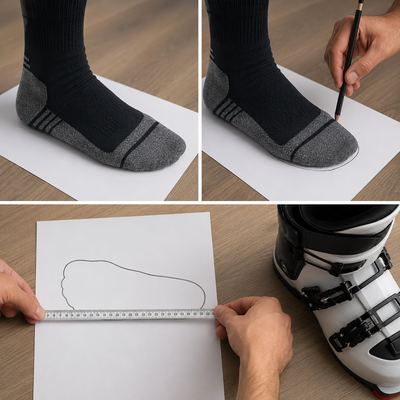
Mondopoint – MP – is a standardized boot sizing system based on foot length in millimeters. To find your Mondopoint size, follow these steps:
Although the Mondo size system is standardized, manufacturers apply these numbers differently to their own lasts, which can lead to differences between companies.
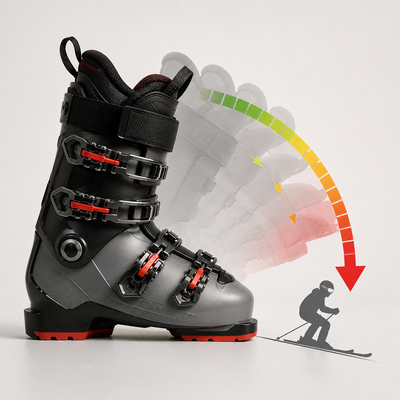
The flex index for ski boots determines the stiffness of the boot. The higher the flex rating, the stiffer the boot becomes and the greater the forward resistance. A high flex rating provides better control over the ski, but also results in less mobility and less comfort. When choosing the right flex, there are two things to consider: First, your body weight. The heavier you are, the higher the flex rating you should choose. Second, the change in flex rating at low temperatures: on cold days, the stiffness of the ski boot can change by up to 25%.
And here, too, the following applies: Every manufacturer defines flex differently, and it can sometimes be difficult to compare different models from different manufacturers with the same flex rating.
© 2026 – Sport - Brugger GmbH. Alle Rechte vorbehalten.