Skip to main navigation Skip to main content Skip to page footer

Cross-country skiing – Which cross-country skis are the right ones?

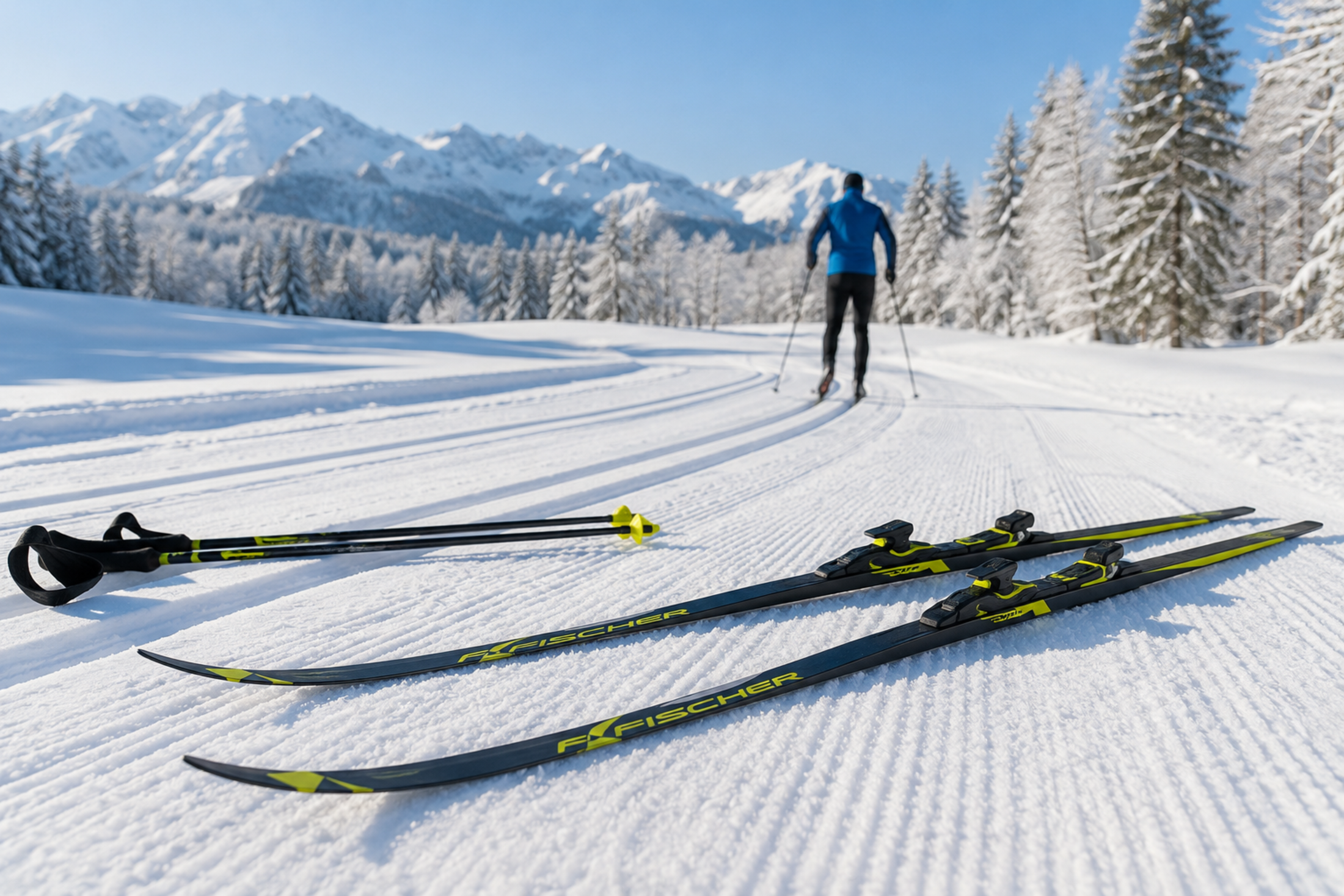
The market offers a wide range of models: long or short skis, skis for classic technique with and without scales, skating skis for fitness or competition, Nordic cruising or Nordic cross models for fun on or off the trail. Accordingly, requirements vary greatly; in any case, the range on offer must be tailored precisely to the individual requirements and wishes of the customer. The staff at Sport Brugger are happy to help. There are two techniques in cross-country skiing: the classic technique (diagonal technique), which is used in soft snow and on groomed trails.

The more modern and popular technique is skating, which requires specially prepared slopes and is more physically demanding. With diagonal skiing, the skier pushes themselves forward using their pushing power in the push-off zone, whereas with skating, forward movement is achieved by pushing off from the inside of the ski. Lightweight equipment is a prerequisite for both techniques. Similar to alpine skis, the most important construction methods are sandwich and box construction, usually built in a special honeycomb shape to save weight while maintaining sufficient stability. Cheaper models are foam-filled on the inside. Unlike alpine skis, cross-country skis are significantly narrower, practically untapered, lighter, and usually longer. Cross-country skis also do not have steel edges.

Types of cross-country skis:

Diagonal skis

Classic cross-country skis are curved in an arc so that the middle section, known as the kick zone, only comes into contact with the snow when pushing off. The camber height and stiffness of a ski are decisive factors in its suitability. Wax skis should glide quickly forward and grip securely when pushing off. To achieve this, the kick zone is prepared with climbing wax (klister) and the gliding zones (front and rear) with gliding wax. Classic diagonal skis for cross-country skiing are longer, less waisted, and have a more upturned tip.

No-wax skis

No-wax skis have the same base zones as wax skis, but the kick zone is equipped with a climbing aid (scale-like structures). These skis are usually slightly softer and wider than wax skis.

Skating skis

The push-off is performed using the inside of the ski with full edge contact and the use of poles. The steps are diagonal forward in the direction of gliding. The skis are shorter but more waisted; the curvature is less and the tips are flatter.

S-Cut

Nordic skis have a slight carving sidecut behind the binding and a wider platform at the front of the ski. This provides more control and stability when skiing downhill and off-piste (backcountry skis).

Cross-country ski bindings

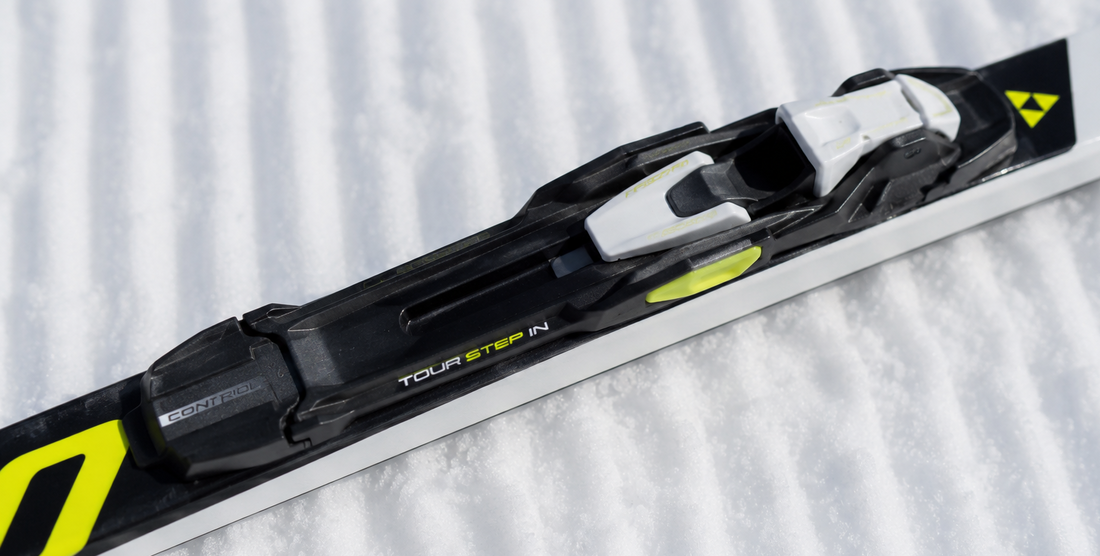
Unlike alpine ski bindings, cross-country ski bindings only secure the shoe at the toes, allowing for vertical movement. When the foot is fully planted, a guide rail stabilizes the boot. In the skating technique, return springs connect the rail and the sole of the boot. The mechanism must be operable with gloves. Especially in the skating technique, the material is exposed to high forces, yet the binding must be light and stable. The return spring stabilizes against lateral forces when the foot is raised and returns the ski to the starting/push-off position. The housing parts are made of impact-resistant plastic or light metal, and the guide rail is made of elastic plastic. Two binding standards have become established: the SNS system (Salomon Nordic System) and the NNN system (New Nordic Norm).

Cross-country skiing boots:

In order to convert the force generated when running directly into forward motion, shoes must have an optimal fit. The heel must be softly but effectively enclosed. When lunging, no pressure creases should form over the toes. An accurately fitting footbed and adequate protection against moisture are equally important.


Whereas leather used to be the main material, synthetic fabrics are now mostly used. This makes the shoes very water-repellent, lightweight, and, in some cases, breathable. For an optimal fit, the shoes are all cut above the ankle; they are closed with a zipper and often with Velcro tape as well. The soles are mostly made of PU, both soft and hard.

Classic shoes

Classic shoes must be most flexible in the ball area so as not to put too much strain on the toe joints when rolling. The sole is torsion-resistant, rather soft, and suitable for walking. The more the upper stabilizes the foot, the better the support when skiing downhill.

Skating boots

The lateral support above the ankle joint gives the foot more support during the diagonal push-off movement. The sole is flexible and torsion-resistant. All cross-country boots have guide grooves that comply with the relevant standard (NNN, SNS).

Cross-country ski poles

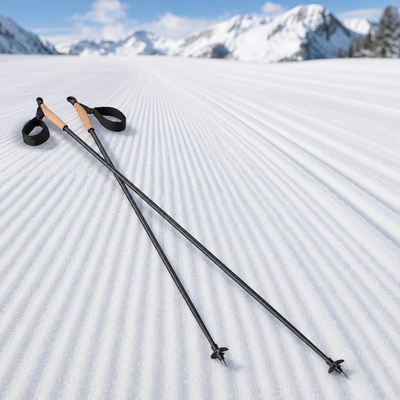
Cross-country ski poles are significantly longer than alpine poles. Due to the lower lateral load but higher pressure load, the poles are significantly stiffer, but thinner and usually lighter. They are usually made of carbon, aluminum, or fiberglass. They are also equipped with asymmetrically shaped, smaller baskets. This prevents them from getting stuck when pushing off.

The grip is usually made of cork, plastic, or rubber or plastic variants of varying hardness (soft or dual-density grip). This provides a good grip and good shock absorption.