Mountain Bikes – What to Look For
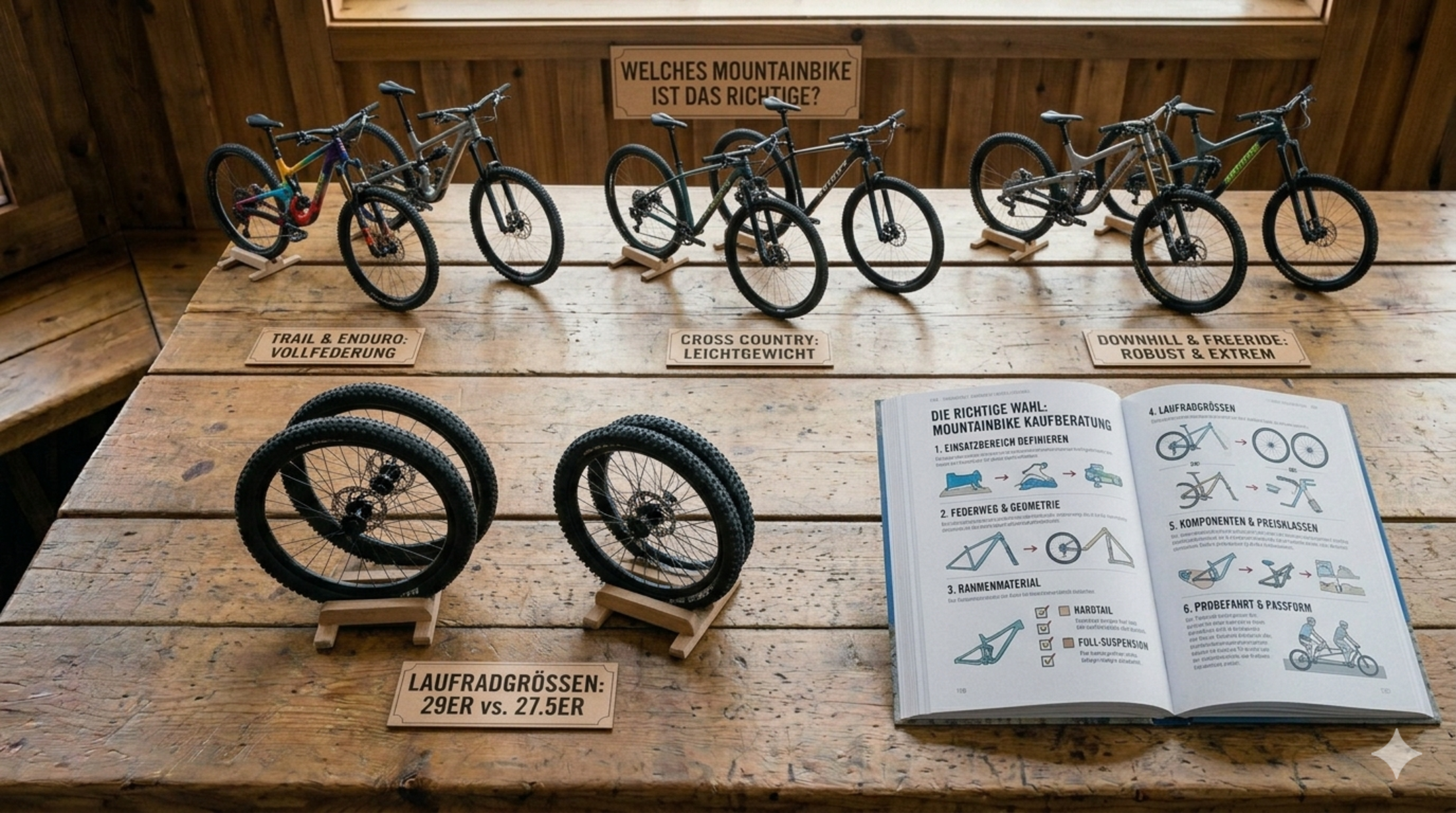
Anyone looking to buy a new mountain bike faces a wide range of choices. Modern technology makes bikes lighter, more powerful, and more versatile—but the key factors are geometry, intended use, and the right riding experience.
Mountain biking is becoming increasingly popular
Thanks to new technology, mountain bikes are becoming lighter, easier to control, and more capable than ever before in many areas.
Geometry and equipment are the deciding factors
The frame shape, riding position, suspension, and chassis design determine how a bike feels when riding uphill, downhill, and off-road.
From sporty trail bikes to full-suspension bikes
Not every mountain bike is suitable for every riding style. This makes it all the more important to choose a bike based on your intended use and personal preferences.
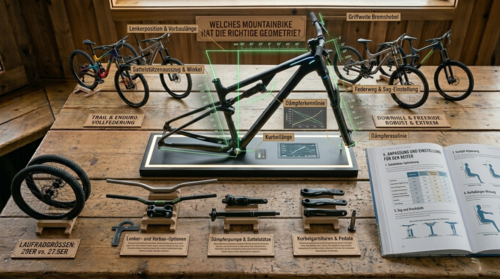
Frame geometry and handling
A mountain bike's geometry affects riding position, handling, stiffness, straight-line stability, and tracking. That is why it is a key factor in choosing the right bike.
Diamond frames: a proven standard
The diamond frame is considered an excellent combination of stability and weight. Two triangles ensure efficient force distribution.
Alternative frame shapes
In addition to traditional frames, there are also wave frames, Y-frames, and various modern designs, which can be selected based on the intended use and design requirements.
Hardtail or full-suspension?
Mountain bikes with front suspension only are called hardtails. Depending on their design, full-suspension models offer additional comfort and control on rough terrain.
If you've never ridden a full-suspension bike before, you can quickly see the benefits for yourself at the bike rental shop.
Important measurements and adjustments on a mountain bike
It's not just the frame height that matters. Riding position, pedaling efficiency, and handling depend on several geometric measurements that must work together.
Seat angle
One of the most important factors for efficient pedaling and a proper riding position on the bike.
Top tube length
Together with the stem, it affects the riding position and the stiffness of the bike.
Chainstay length
A shorter rear end usually improves traction and handling when climbing.
Wheelbase
A longer wheelbase ensures a smoother ride, while a shorter one offers greater maneuverability.
Bottom bracket height
On a mountain bike, it's higher than on a road bike, so the pedals and chainrings don't hit the ground as easily when riding off-road.
Steering angle & head tube
These measurements affect how directly, sensitively, or smoothly the bike responds to steering inputs.
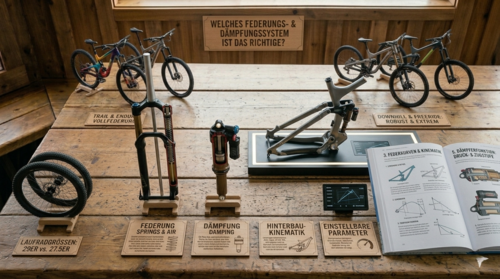
Suspension and Damping on Mountain Bikes
Bicycles with suspension forks offer greater control, comfort, and safety when riding off-road. To ensure that the wheels maintain as much contact with the ground as possible, the suspension and damping must work together effectively.
Suspension and damping are not the same thing
The suspension absorbs movements and vibrations. The damping prevents the chassis from bouncing uncontrollably.
Fixed forks
Rigid forks are lighter, require less maintenance, and are more affordable, but they offer significantly less comfort and control off-road than suspension forks.
Carbon forks
They are even lighter than aluminum forks, but more delicate. Thanks to their shape and material, they can already absorb some of the impact from small bumps.
Suspension forks depending on the application
Suspension travel varies significantly depending on the discipline—from cross-country to downhill. The choice depends on how and where the bike will be ridden.
Are you looking for the right mountain bike?
We’ll provide personalized advice on geometry, components, suspension, and the right bike for road, trail, and alpine terrain.